
Which Sentence Is An Example Of Formal Language
Which Sentence Is An Example Of Formal Language - Informal language is a common, everyday language, which might include slang words. Formal language is usually reserved for professional and academic settings, while informal writing is used for more casual settings, like friendly text messages and creative writing. Formal language, on the other hand, is the everyday words and grammar people use in both written and spoken communication. Web deciding when to use formal language and when it’s better to write informally goes back to the question of who your audience is. Web learn how to use formal and informal english in spoken or written english. Informal language allows the use of nonstandard english forms, colloquial vocabulary and typically shorter sentence structures.
For example, if you’re writing to a prospective client, you want to seem professional,. You should use formal language in papers, written discussions, tests, research papers, resumes, and cover letters. Like many languages, english has a formal and informal register (how a language is used in different situations). Knowing the differences between the two can significantly improve your level of fluency. Web formal language is characterized by the use of standard english, more complex sentence structures, infrequent use of personal pronouns, and lack of colloquial or slang terms.
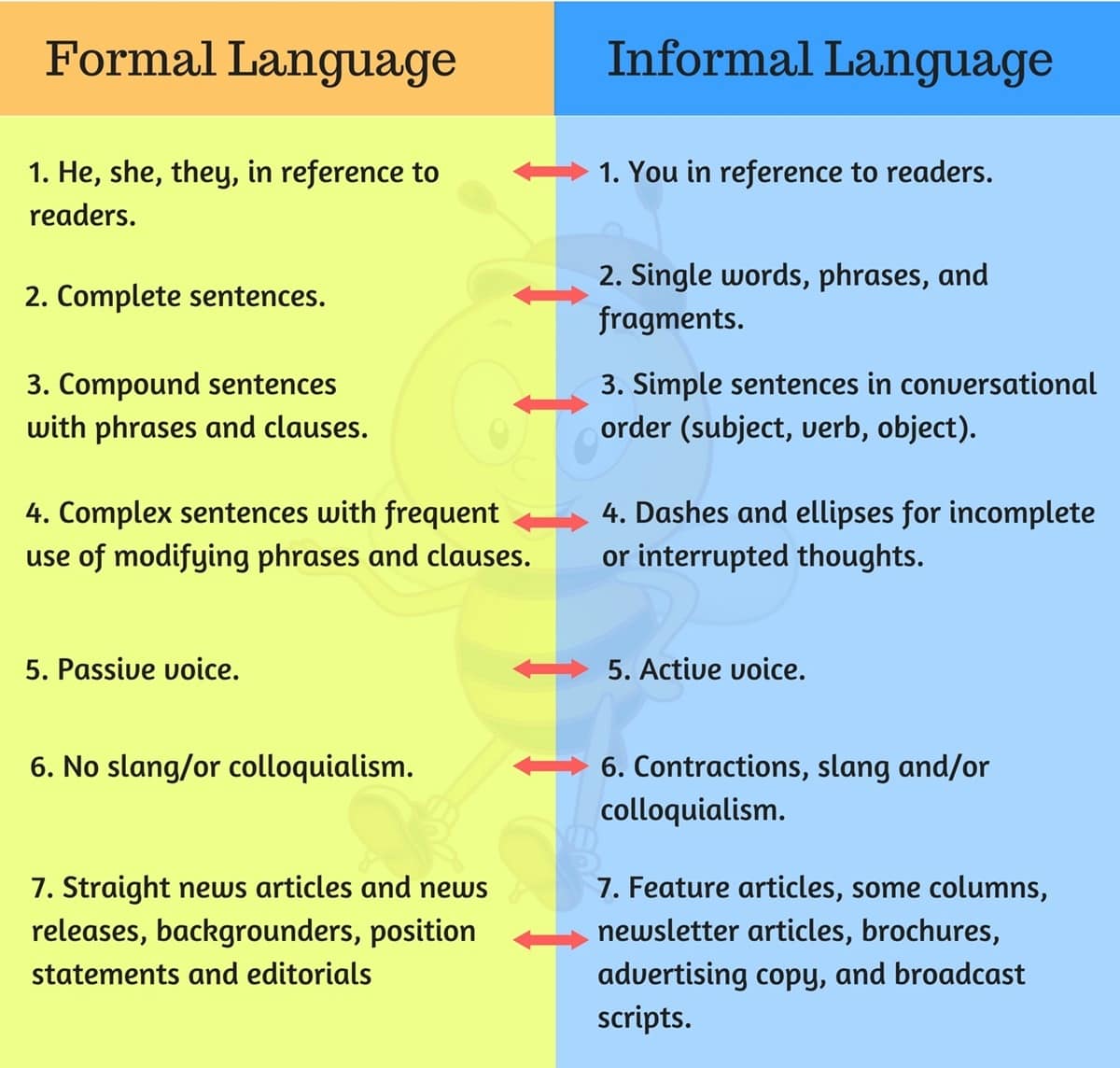
What Is An Example Of A Formal Sentence PunctuationFree Insights
Informal language is a common, everyday language, which might include slang words. Web formal language is official and academic language. 6 key differences with example sentences. Web deciding on using formal or informal language depends on what you’re writing and who you’re writing it for: Informal language is more commonly used in situations that are more relaxed and involve people.

Formal And Informal Sentences
Web learn how to use formal and informal english in spoken or written english. It is casual and continually changing. Formal language is more common when we write; Web formal language is the words and grammar used in formal situations. 6 key differences with example sentences.

What is the Difference Between Formal and Informal Language? ESLBUZZ
Informal language allows the use of nonstandard english forms, colloquial vocabulary and typically shorter sentence structures. Formal language, on the other hand, is the everyday words and grammar people use in both written and spoken communication. Web example sentences using formal language: Formal language is more common when we write; People use formal language mostly in written communication in professional.

Which Revision Best Removes the Informal Language From This Passage
Informal language is a common, everyday language, which might include slang words. Informal language is more commonly used in situations that are more relaxed and involve people we know well. Web learn how to use formal and informal english in spoken or written english. Web deciding when to use formal language and when it’s better to write informally goes back.

Formal and Informal Language Examples Formal language, Language, Writing
Web deciding on using formal or informal language depends on what you’re writing and who you’re writing it for: The following rules describe a formal language l over the alphabet σ = {0, 1, 2, 3, 4, 5, 6, 7, 8, 9, +, =}: People use formal language mostly in written communication in professional or academic settings. Informal language is.
Which Sentence Is An Example Of Formal Language - For example, if you’re writing to a prospective client, you want to seem professional,. Formal language is more common when we write; You should use formal language in papers, written discussions, tests, research papers, resumes, and cover letters. Formal language is usually reserved for professional and academic settings, while informal writing is used for more casual settings, like friendly text messages and creative writing. It is casual and continually changing. Informal language is more commonly used in situations that are more relaxed and involve people we know well.
Informal language allows the use of nonstandard english forms, colloquial vocabulary and typically shorter sentence structures. The following rules describe a formal language l over the alphabet σ = {0, 1, 2, 3, 4, 5, 6, 7, 8, 9, +, =}: 6 key differences with example sentences. Knowing the differences between the two can significantly improve your level of fluency. You should use formal language in papers, written discussions, tests, research papers, resumes, and cover letters.
You Can Learn The Differences Between Formal And Informal English In This Lesson.
Formal language is usually reserved for professional and academic settings, while informal writing is used for more casual settings, like friendly text messages and creative writing. Informal language is more commonly used in situations that are more relaxed and involve people we know well. Web we use formal language in situations that are serious or that involve people we don’t know well. What is the difference between formal and informal language?
Web Deciding On Using Formal Or Informal Language Depends On What You’re Writing And Who You’re Writing It For:
It is casual and continually changing. Formal language is more common when we write; Web formal versus informal english: Web formal language is the words and grammar used in formal situations.
For Example, If You’re Writing To A Prospective Client, You Want To Seem Professional,.
You should use formal language in papers, written discussions, tests, research papers, resumes, and cover letters. 6 key differences with example sentences. Web learn how to use formal and informal english in spoken or written english. Informal language is more common when we speak.
Informal Language Is A Common, Everyday Language, Which Might Include Slang Words.
Web example sentences using formal language: Web formal language is characterized by the use of standard english, more complex sentence structures, infrequent use of personal pronouns, and lack of colloquial or slang terms. Informal language allows the use of nonstandard english forms, colloquial vocabulary and typically shorter sentence structures. Web formal language is official and academic language.